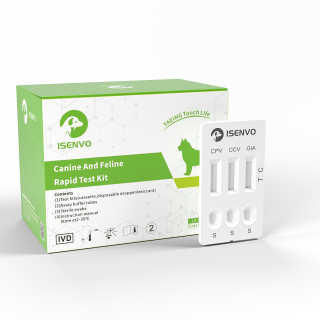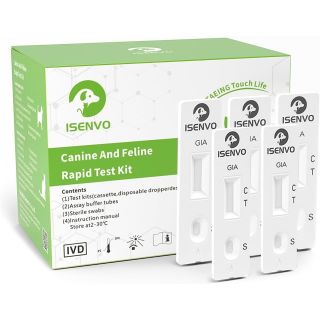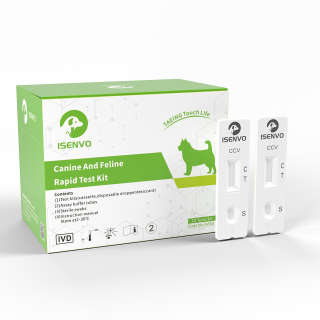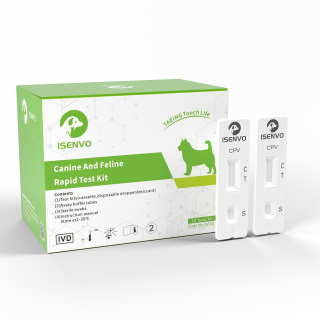
As a responsible pet owner, you've likely experienced those moments of anxiety: your usually energetic dog suddenly becomes lethargic, loses appetite, or even starts vomiting or having diarrhea. Faced with this situation, we often find ourselves torn—should we wait and observe, or rush to the veterinary hospital immediately?
Today, we'll explore three common canine infectious pathogens—Canine Coronavirus (CCV) , Canine Parvovirus (CPV) , and the inflammatory marker Canine Fecal Calprotectin (GIA, referring to gastrointestinal inflammation indicators like fecal calprotectin) —and why combined testing for these markers is vital for your beloved dog's health.
Part 1: CCV and CPV — The Two Major Viral "Culprits" Threatening Canine Health
Canine Coronavirus (CCV) : The Highly Contagious Intestinal "Destroyer"
Canine Coronavirus primarily infects the intestinal epithelial cells of dogs, causing acute gastroenteritis. This virus spreads rapidly, especially among puppies and in high-density breeding environments.
Typical symptoms of CCV infection include:
-
Sudden onset of diarrhea (stool may appear orange or contain blood)
-
Vomiting
-
Loss of appetite
-
Lethargy
Canine Parvovirus (CPV) : The "Number One Killer" with High Mortality
Canine Parvovirus is a pathogen that every pet owner must vigilantly guard against. It attacks rapidly dividing cells, particularly those in the intestinal tract and bone marrow, leading to severe gastrointestinal damage and immunosuppression.
Warning signs of CPV infection:
-
Severe vomiting and hemorrhagic diarrhea (often with a foul odor)
-
Rapidly developing dehydration
-
Fever or hypothermia
-
Sharp decrease in white blood cells
CPV has an extremely high mortality rate in puppies, and timely diagnosis and treatment are critical for saving lives.
What Research Reveals: Co-infections Are Common
Many pet owners don't realize that intestinal infections in dogs are often not caused by a single pathogen. Multiple scientific studies have shown that co-infections of CCV and CPV are quite common in dogs with diarrhea.
One study on diarrheic dogs found that 45.1% of dogs testing positive had co-infections with multiple pathogens. Among these, Canine Parvovirus (CPV-2) was the most common pathogen involved in co-infections, frequently appearing alongside Clostridium perfringens, Cryptosporidium, or Giardia.
Another important study confirmed that among pathogens causing diarrhea in dogs, only CPV and CCV showed significant statistical association with diarrhea. This means that when your dog develops diarrhea, CPV and CCV should be prioritized in the diagnostic workup.
This study also identified several important risk factors:
-
Puppies under 3 months of age are at highest risk for CPV infection
-
Dogs from large breeding establishments had 4.20 times higher risk for CPV and 4.50 times higher risk for CCV
-
Compared to summer, winter and spring are high-incidence seasons for both CPV and CCV infections
Testing for only a single pathogen may miss concurrent infections, leading to incomplete treatment plans and delayed recovery.
Part 2: GIA (Fecal Calprotectin) — The "Barometer" of Intestinal Inflammation
If CCV and CPV testing is about identifying the "culprit" causing the disease, then GIA (specifically referring to inflammatory markers like fecal calprotectin) testing assesses the "severity" of intestinal damage.
What is Fecal Calprotectin?
Calprotectin is a calcium-binding protein primarily found in neutrophils. When intestinal inflammation occurs, neutrophils infiltrate the intestinal mucosa and release calprotectin, which is then excreted in the feces.
Why is GIA Testing So Important?
-
Quantifying Inflammation Severity: Fecal calprotectin concentration directly correlates with the severity of intestinal inflammation. Research shows that dogs with higher Canine Inflammatory Bowel Disease Activity Index (CIBDAI) scores (e.g., ≥12) have significantly elevated fecal calprotectin levels.
-
Evaluating Treatment Response: GIA testing can monitor treatment effectiveness. During therapy, decreasing fecal calprotectin levels indicate improvement in intestinal barrier function. Conversely, if levels don't normalize, it may suggest incomplete remission. Notably, increases in fecal calprotectin may occur before clinical deterioration, providing a valuable window for early intervention.
-
Predicting Treatment Needs: Studies indicate that higher fecal calprotectin concentrations correlate with increased likelihood of needing immunosuppressive therapy. This provides crucial guidance for veterinarians in developing treatment plans.
-
Distinguishing Inflammation Types: While fecal calprotectin primarily reflects neutrophil-mediated inflammation, and canine chronic enteritis often involves lymphocyte-plasmacytic infiltration, elevated calprotectin still indicates an active inflammatory process requiring attention.
Recent research has further confirmed that dogs with gastrointestinal inflammation have significantly higher fecal calprotectin concentrations compared to healthy control dogs. This underscores the value of GIA testing in identifying intestinal inflammation.
Part 3: CCV+CPV+GIA Combined Testing — Why "1+1+1 > 3"?
1. Comprehensive Assessment, Avoiding Missed Diagnoses
As mentioned earlier, co-infections are common in dogs with diarrhea. Combined CCV and CPV testing comprehensively screens for viral infections, while GIA testing assesses inflammation severity. Together, they identify both the cause and the extent of the disease, providing a complete foundation for precision treatment.
2. Distinguishing Pathogen Carriers from True Illness
Research has found that 30.2% of dogs without diarrhea symptoms also tested positive for pathogens. This means that detecting a virus doesn't necessarily explain the current symptoms. Here, GIA testing proves invaluable—if a dog tests positive for a virus but has normal fecal calprotectin levels, the virus may not be causing significant intestinal inflammation, suggesting the dog might be an asymptomatic carrier. Conversely, significantly elevated calprotectin indicates active intestinal inflammation requiring intervention.
3. Assessing Prognosis, Guiding Treatment
Fecal calprotectin levels reflect disease severity and can predict treatment response. Combined with viral test results, veterinarians can:
-
Determine whether inflammation is directly caused by viral infection or involves other factors
-
Assess the need for immunosuppressive medication based on calprotectin levels
-
Dynamically monitor calprotectin changes during treatment to adjust therapy promptly
-
Confirm true "biological remission" after clinical improvement through calprotectin normalization
4. Early Warning, Preventive Action
Fecal calprotectin elevation may precede clinical deterioration. For dogs known to be infected with CCV or CPV, regular GIA monitoring can detect early inflammation worsening, enabling intervention before the condition becomes severe.
Part 4: Which Dogs Most Need CCV+CPV+GIA Combined Testing?
Based on scientific research, the following groups of dogs should prioritize combined testing:
-
Puppies with acute diarrhea (under 3 months) : Highest risk group for CPV, with common co-infections
-
Dogs from kennels, shelters, or multi-dog households: High-density environments increase infection and transmission risks
-
Diarrhea lasting more than 2-3 days: May require comprehensive etiological investigation
-
Severe symptoms like bloody diarrhea, profuse vomiting, lethargy: Need rapid diagnosis to guide emergency treatment
-
Chronic diarrhea unresponsive to conventional treatment: May involve co-infections or excessive inflammatory responses
-
Pre-adoption health screening for new puppies: Early detection enables early isolation and treatmen
Conclusion: Protecting Your Dog's Health Begins with Scientific Testing
Dogs can't speak. When they feel unwell, they can only communicate through behavior and symptoms. As their trusted family members, we have the responsibility to understand these signals and take appropriate action promptly.
CCV+CPV+GIA combined testing represents precisely such a scientific, comprehensive health assessment tool. It not only rapidly identifies pathogenic culprits but also objectively evaluates intestinal inflammation severity, helping veterinarians develop more precise treatment plans, improve recovery rates, and reduce suffering for our canine companions.
Remember, for canine infectious diseases, early detection, early diagnosis, and early treatment remain the fundamental principles. Keeping test kits at home could be the key to saving your beloved dog's life in a critical moment.
May every dog live a healthy, happy life, accompanying us through countless beautiful moments!